
Buying a used car can be a practical way to own a vehicle while keeping the purchase cost lower than a new car. However, a used vehicle requires careful checking before you make the payment.
From checking the car’s condition and service history to verifying documents, insurance, and financing options, every step matters. A low-priced car is not necessarily a good deal if it comes with hidden repair costs or documentation issues.
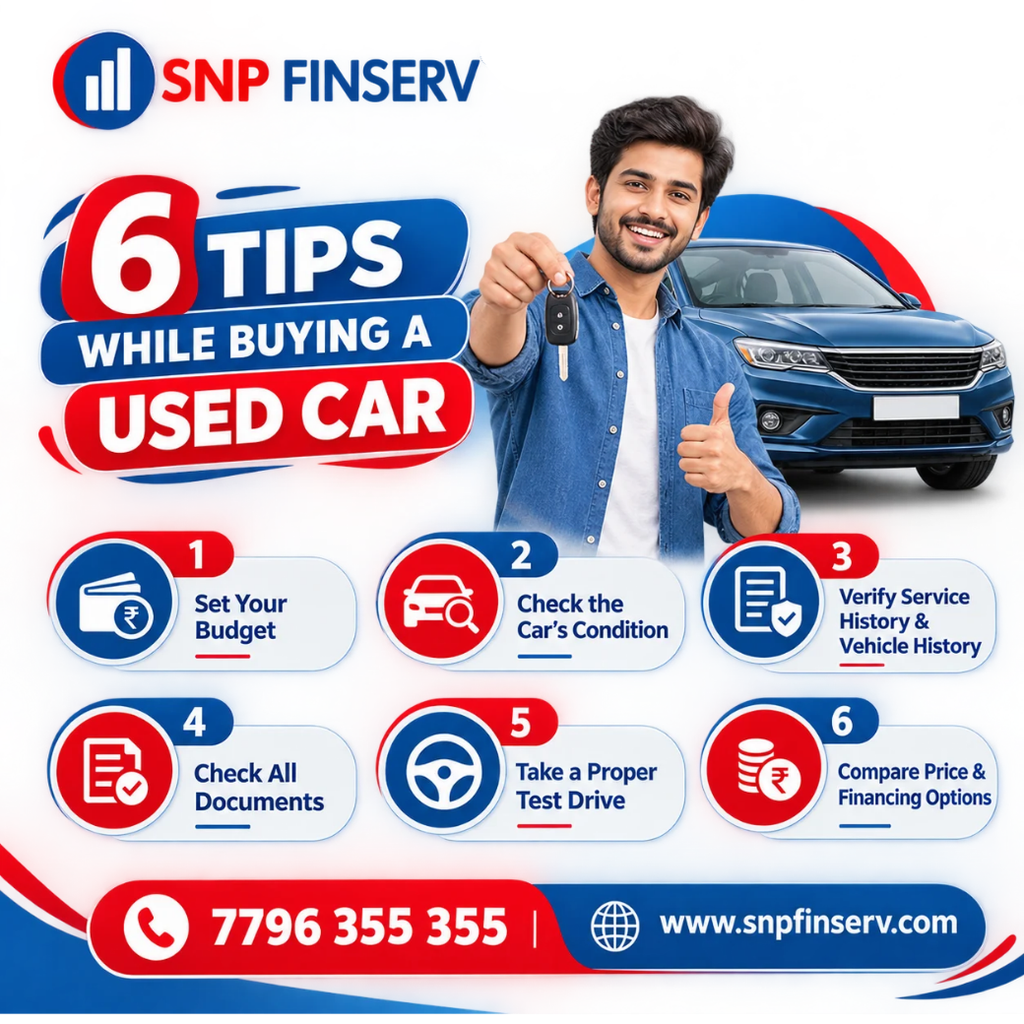
Here are 6 important tips to follow while buying a used car.
1. Set Your Budget Before Buying
The first step is to decide how much you can comfortably spend on the car.
Don’t consider only the purchase price. A used car can involve additional expenses after purchase.
Consider These Costs:
- Car purchase price
- Down payment, if financing the car
- Monthly loan EMI
- Insurance
- Registration and transfer charges
- Maintenance and servicing
- Fuel expenses
- Tyres and battery replacement
- Unexpected repair costs
Why Is Budgeting Important?
A car should fit comfortably within your overall financial plan. Avoid choosing a vehicle solely because the EMI appears affordable.
Before taking a used car loan, calculate the total repayment amount and check whether the EMI fits within your monthly budget.
2. Check the Car’s Condition Carefully
Never purchase a used car based only on photographs or the seller’s description.
Inspect the vehicle carefully, preferably during daylight.
Check the Exterior:
- Look for dents and scratches.
- Check for differences in paint colour.
- Inspect the doors, bonnet, and boot.
- Look for signs of accident repairs.
- Check the condition of the tyres.
- Inspect the windshield and other glass.
- Check the lights and indicators.
Check the Interior:
- Examine the seats and dashboard.
- Check the air conditioning.
- Test the infotainment system.
- Check power windows and central locking.
- Test the horn and other controls.
- Look for unusual smells or signs of water damage.
Check the Engine and Mechanical Condition:
- Look for oil or fluid leakage.
- Listen for unusual engine sounds.
- Check the exhaust smoke.
- Test the brakes and clutch.
- Observe steering and suspension performance.
Tip: Consider getting the car inspected by an independent mechanic before finalising the purchase.
3. Verify the Service History and Vehicle History
A car’s condition cannot always be determined by its appearance.
The service history can help you understand how the vehicle was maintained.
Check For:
- Previous service records
- Major repairs
- Accident history
- Replacement of important components
- Odometer consistency
- Regular maintenance
- Previous ownership details
If the seller claims that the car has very low mileage, compare the odometer reading with available service records.
Why Does Service History Matter?
Regular servicing can indicate that the vehicle has been maintained properly. Missing records don’t automatically mean the car is problematic, but they are a reason to investigate further before buying.
4. Verify All Documents
Documentation is one of the most important parts of buying a used car.
Before making the payment, verify the vehicle and ownership documents carefully.
Important Documents to Check:
- Registration Certificate (RC)
- Valid motor insurance
- Pollution Under Control (PUC) certificate, where applicable
- Vehicle identification details
- Service records
- Loan or hypothecation status, if applicable
- Required ownership-transfer documents
Make sure the seller’s details and vehicle details are consistent across the relevant documents.
Check for Pending Dues or Issues
Before purchasing, check whether there are any:
- Pending traffic challans
- Outstanding loan/hypothecation issues
- Registration-related issues
- Insurance-related concerns
Important: Complete the ownership transfer through the appropriate official process rather than relying only on a private agreement with the seller.
5. Take a Proper Test Drive
A test drive can reveal problems that may not be obvious during a visual inspection.
Don’t rush through the test drive.
During the Test Drive, Check:
- Engine starting and idling
- Acceleration
- Braking
- Steering response
- Gear shifting
- Clutch operation
- Suspension
- Unusual noises
- Vehicle stability
- Air conditioning
- Dashboard warning lights
Try driving the car in different conditions where practical, such as normal roads, traffic, and uneven surfaces.
Pay Attention to Unusual Sounds
Listen for:
- Knocking sounds
- Suspension noises
- Brake squealing
- Engine vibrations
- Gearbox noise
If something feels unusual, get it checked before proceeding with the purchase.
6. Compare the Price and Financing Options
Once you are satisfied with the vehicle’s condition, compare its price with similar used cars in the market.
Consider factors such as:
- Car model
- Manufacturing year
- Variant
- Kilometres driven
- Number of previous owners
- Service history
- Overall condition
- Location
- Insurance status
Don’t focus only on the lowest price. Consider the overall value and potential maintenance cost.
If You Need Financing
A used car loan can help spread the purchase cost through monthly EMIs, subject to the lender’s eligibility criteria.
Before choosing financing, compare:
- Loan amount
- Interest rate
- Loan tenure
- EMI
- Processing fee
- Other applicable charges
- Total repayment amount
- Prepayment or foreclosure conditions, where applicable
Choose a repayment plan that fits comfortably within your budget.
Bonus Tip: Don’t Rush the Purchase
A used car purchase should not be based on pressure from the seller or a limited-time offer.
Take sufficient time to:
- Inspect the vehicle.
- Verify the documents.
- Check the service history.
- Take a test drive.
- Compare prices.
- Calculate your financing cost.
- Understand the ownership-transfer process.
If anything important is unclear, resolve it before making the payment.
Used Car Buying Checklist
Before finalising your purchase, make sure you have checked:
- ✅ Your total budget
- ✅ Car’s exterior and interior condition
- ✅ Engine and mechanical condition
- ✅ Tyres and battery
- ✅ Service history
- ✅ Accident/repair history where available
- ✅ RC and ownership details
- ✅ Insurance and PUC
- ✅ Pending dues/challans
- ✅ Loan/hypothecation status
- ✅ Test drive
- ✅ Market price
- ✅ Used car loan EMI and total repayment
- ✅ Ownership transfer requirements
Used Car Loan: What Should You Know?
If you don’t want to pay the entire purchase price upfront, financing may be an option depending on the lender and your eligibility.
Before applying for a used car loan, consider your income, existing financial commitments, and repayment capacity.
Check These Factors:
- Loan eligibility
- Required documents
- Interest rate
- Processing charges
- Loan tenure
- EMI
- Total interest payable
- Total repayment
- Lender-specific terms and conditions
Remember that loan approval, interest rates, and terms depend on the respective lender’s policies and your credit profile.
Conclusion
Buying a used car can be a significant financial decision. Checking the vehicle condition, service history, documents, test-drive performance, market price, and financing cost can help you make a more informed purchase.
Most importantly, don’t judge a used car only by its price. Consider its condition, history, ownership documents, expected maintenance costs, and your ability to repay any financing.
Need Help With Your Loan Requirement?
SNP FINSERV can help you understand available loan options and the important factors to consider before applying.
📞 7796 355 355
🌐 www.snpfinserv.com
Disclaimer
Loan approval, interest rates, tenure, fees, and eligibility are subject to the respective lender’s policies and credit assessment. This content is for educational and informational purposes only and should not be considered financial advice.